
Search Troup County Court Records
Troup County does not have one free public database that covers every court record. The strongest local starting points are the Clerk of Courts website, its case-search link, posted court calendars, the Troup County JustFOIA portal, and the clerk counter for certified copies. Georgia Courts also maintains an e-access court records page, but that source states users are redirected to a provider website and may need an account.
The county open-records page says the County Clerk and Deputy Clerk serve as open-records officers for county records. Requesters can track requests through the portal, receive email updates, and get a response within three business days about whether responsive records exist and whether they are subject to release. Court case files still may require handling by the Clerk of Superior and State Courts rather than a general county records request.
- Start with the Clerk of Courts website for case-search links, calendar pages, forms, fees, and contact details.
- Check posted Superior Court, State Court, civil, and municipal calendars when the question is about a hearing date.
- Use the JustFOIA portal for county public records that are not directly available online.
- Call or visit the Clerk of Superior and State Courts when a certified copy, final docket sheet, or old paper file is needed.
- Use the correct separate system for jail inmates, warrants, traffic tickets, marriage licenses, or DDS driving history.
Troup County's open-records page describes the county request process and links to the public portal.
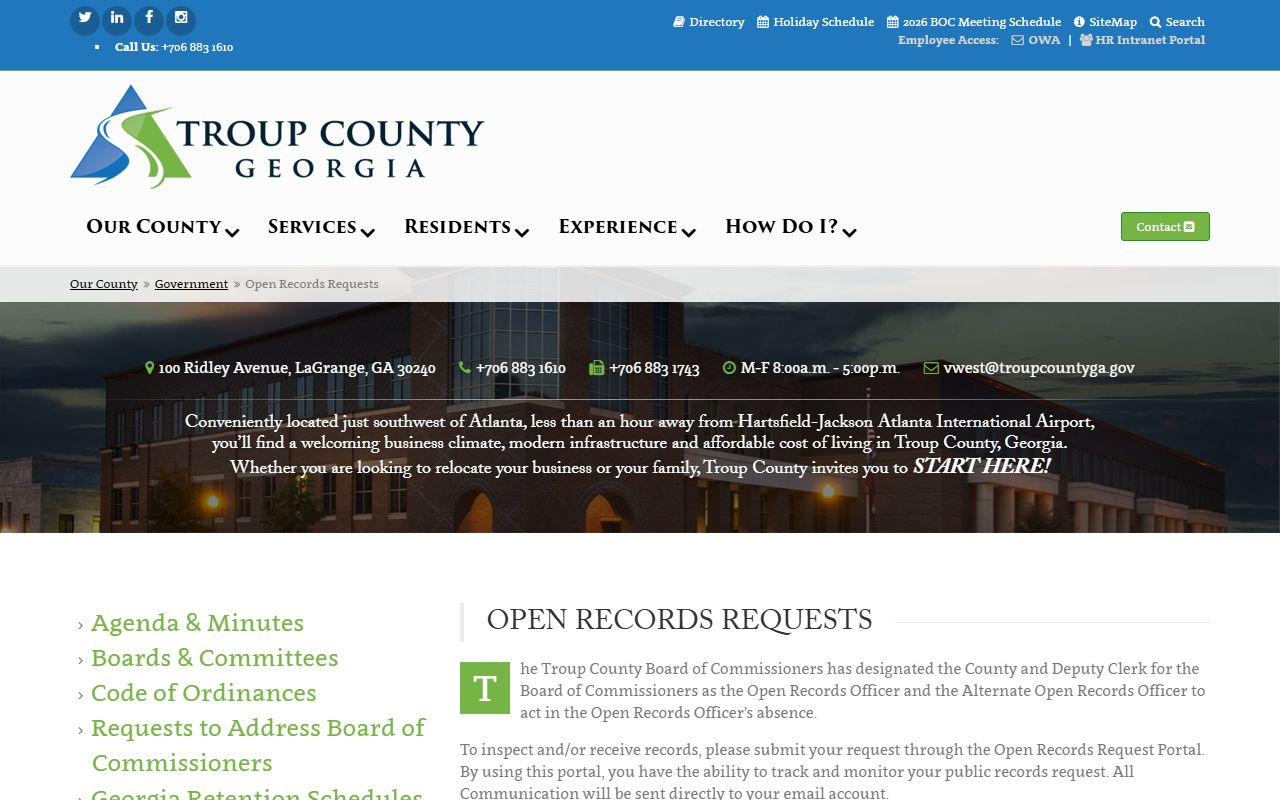
The portal is useful when a record is not posted online, but court-certified copies still come from the court office that holds the file.
Troup County Court System
Troup County is in Georgia's Coweta Judicial Circuit for Superior Court. The Superior Court is the broad trial court for felony criminal cases, divorce, equity, title-to-land cases, and major civil matters. State Court handles misdemeanor criminal cases, traffic cases, and civil actions unless Superior Court has exclusive jurisdiction. Magistrate Court handles arrest warrants, first appearances, bail, committal hearings, and smaller civil matters.
Probate Court is a separate local court for estates, guardianships, conservatorships, marriage licenses, weapons carry licenses, and certain mental-health commitment matters. Juvenile Court operates nearby with restricted public access. LaGrange and Hogansville municipal courts handle city traffic, ordinance, and limited misdemeanor matters.
Georgia's Judicial Council and Administrative Office of the Courts provides statewide court-system context.
Statewide court structure matters because a Troup County record can sit in a county court, city court, or state-level system.
| Court or Office | Main Role | Troup County Record Types |
|---|---|---|
| Superior Court | General jurisdiction | Felonies, divorce, equity, title to land, major civil cases |
| State Court | Limited jurisdiction | Misdemeanors, traffic cases, civil actions not reserved to Superior Court |
| Magistrate Court | Warrants and first hearings | Arrest warrants, first appearances, bail, committal hearings, small civil matters |
| Probate Court | Probate and licenses | Estates, guardianships, marriage licenses, weapons carry licenses |
| Municipal Courts | City cases | Traffic, ordinance, DUI and city misdemeanor matters where assigned |
Troup County Court Locations
The main court location is the Troup County Government Center in downtown LaGrange. The Clerk of Superior and State Courts is listed in Suite 1600. State Court, Magistrate Court, Probate Court, the Solicitor, Court Services, and several related court offices also use Ridley Avenue locations. Juvenile Court is nearby at 118 Ridley Avenue, while the Sheriff's Office and jail are separate from the government center.
Troup County government publishes department pages, public notices, court links, and local access information.
The county site is the best first stop for official department pages before using a third-party vendor or state portal.
Clerk of Superior and State Courts
100 Ridley Avenue, Suite 1600
LaGrange, GA 30240
706-883-1740
Troup County Clerk Records
Jackie W. Taylor is the Troup County Clerk of Superior and State Courts. The clerk's county page says the office receives, manages, and processes court documents; collects and disburses court fees, fines, and costs; provides public access to court records; records deeds, mortgages, charters, and notaries; and serves as the business arm of the local court system. GSCCCA lists the office as managing Superior, State, and Traffic courts.
The clerk office contact information is 100 Ridley Avenue, Suite 1600, LaGrange, Georgia 30240, with mailing to P.O. Box 866, LaGrange, Georgia 30241. The main phone is 706-883-1740, fax is 706-883-1724, and regular hours are Monday through Friday, 8:00 a.m. to 5:00 p.m. The clerk site also lists 706-883-1725 for traffic citation questions.
The county Clerk of Superior and State Courts page identifies Jackie Taylor and summarizes the office's court-record and recording duties.
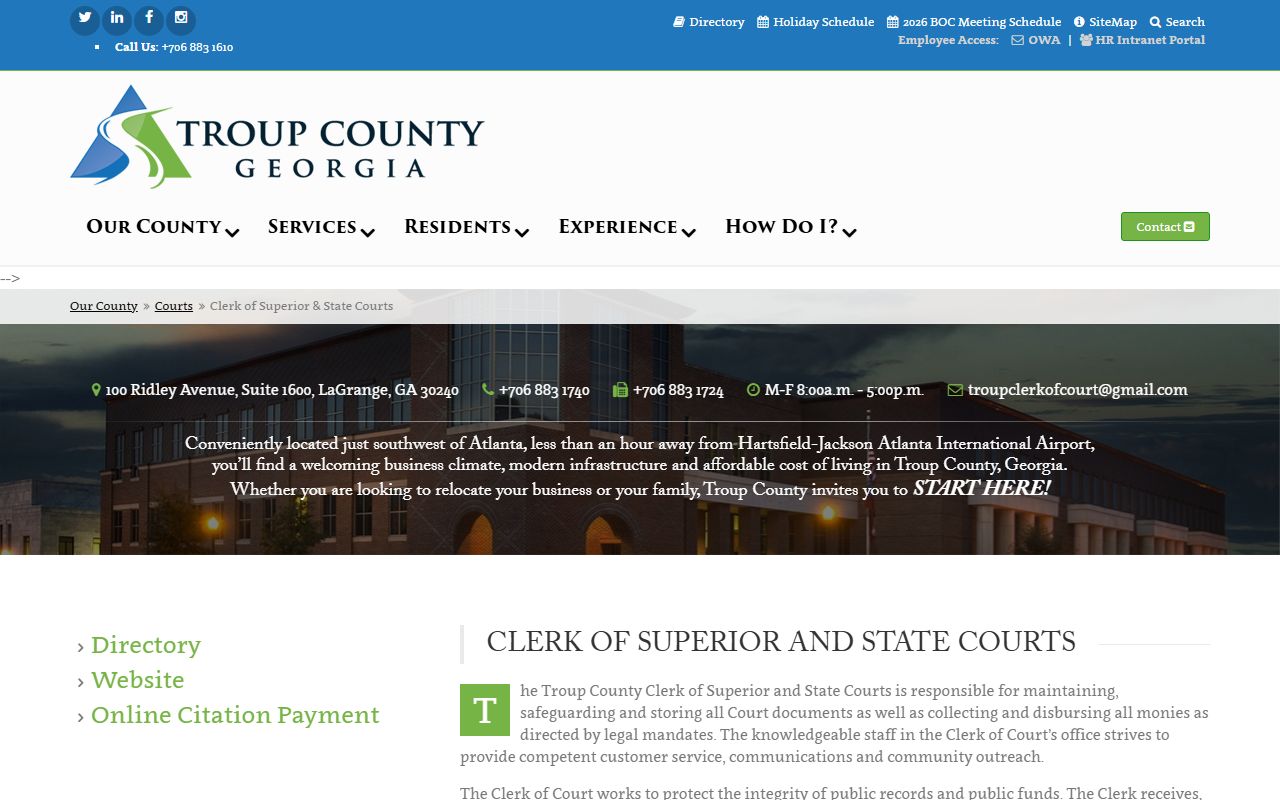
That county page is the local government source for the clerk role, while the separate clerk website carries many online services and calendars.
The official Clerk of Courts website hosts online-service links, forms, calendars, e-filing information, fee schedules, staff contacts, and notices.
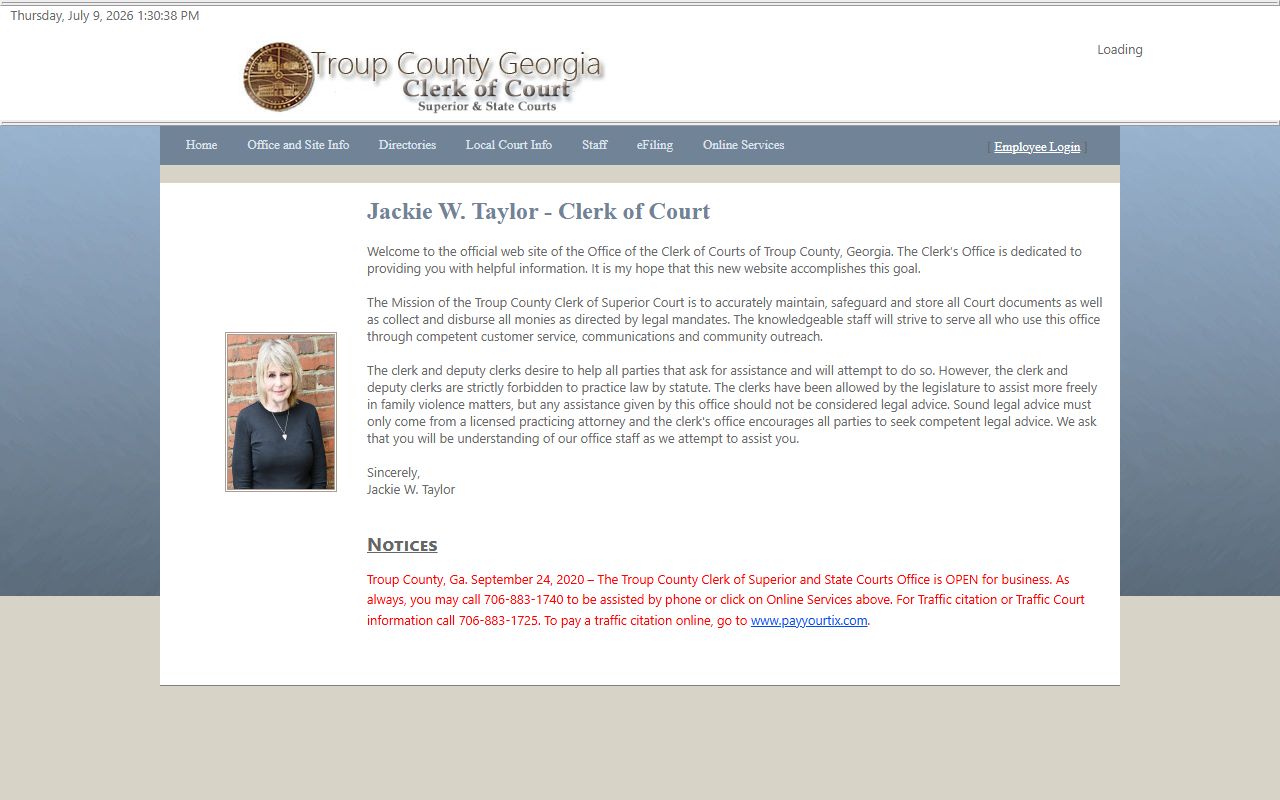
For certified court records, the clerk's office remains the key source even when a calendar or online vendor shows a public summary.
| Clerk Fee Item | Amount or Rule |
|---|---|
| Uncertified copies, no assistance required | $0.50 per page |
| Uncertified copies with assistance | $1.00 per page |
| Certified or exemplified first page | $2.50 |
| Certified or exemplified each page after first | $1.00 |
| Certificate and seal | $2.00 in addition to other costs |
Troup County Court Record Types
Troup County court records include civil, criminal, family, probate, marriage, divorce, traffic, warrant, and juvenile record streams. Civil records may show complaints, answers, motions, orders, judgments, writs, fi.fas., garnishments, service returns, and appeal papers. Criminal records may show charges, warrants, bond, arraignment, pleas, motions, discovery orders, docket entries, sentence, probation terms, revocations, and disposition.
Traffic court records are separate from Georgia DDS driver-history reports. Probate records are not the same as Superior Court divorce records. Juvenile files have their own confidentiality rules. A full Troup County court records search works best when the case type and likely court are identified first.
- Civil records include contract disputes, premises liability, garnishments, liens, and post-judgment entries.
- Criminal records include felony files in Superior Court and misdemeanor files in State Court.
- Family records include divorce filings, domestic orders, standing orders, and mediation records where public.
- Probate records include estate, guardianship, conservatorship, and marriage-license material.
- Traffic records include citations, court dates, pleas, dispositions, fines, and failure-to-appear records.
Troup County Court Record Fields
Local court records and calendars use fields that help identify the court, parties, case stage, and final result. Calendar PDF titles often encode the year, month, day, court, county, case type, and hearing type. LaGrange municipal calendar data shows court date, name, violation date, case number, ticket number, violation code, payment link, court date type, and violation description.
| Field | What It Shows |
|---|---|
| Case number | The court-assigned identifier used to locate a file, docket entry, ticket, or calendar listing. |
| Court | Superior, State, Magistrate, Probate, Juvenile, LaGrange Municipal, or Hogansville Municipal venue. |
| Parties | Plaintiff and defendant, state and defendant, petitioner and respondent, or estate and representative. |
| Docket event | Arraignment, pretrial, motion, bench trial, jury trial, probation revocation, committal hearing, or civil calendar event. |
| Disposition | The outcome of a charge, claim, motion, ticket, or case, such as dismissed, guilty, judgment, or order entered. |
Troup County Court Dockets
The Clerk of Courts posts State Court criminal calendars, Superior Court criminal calendars, civil calendars, local orders, and standing orders. Calendar pages are useful for hearing dates and event types, but they are not certified case records. The State Court Criminal Calendar page warns that the primary sources used by the Clerk must be consulted for verification and certification, and that calendars can change after posting.
The local orders page includes ADR, case assignment, discovery, and calendar orders, including current calendar-management notices. Troup calendars include arraignment, non-English arraignment, bench trial, pre-trial, jury trial, probation revocation, motion, and civil non-jury entries. The Troup County court dockets page focuses on calendar sources and docket fields.
The State Court criminal calendar page is one of the main clerk-posted docket sources.
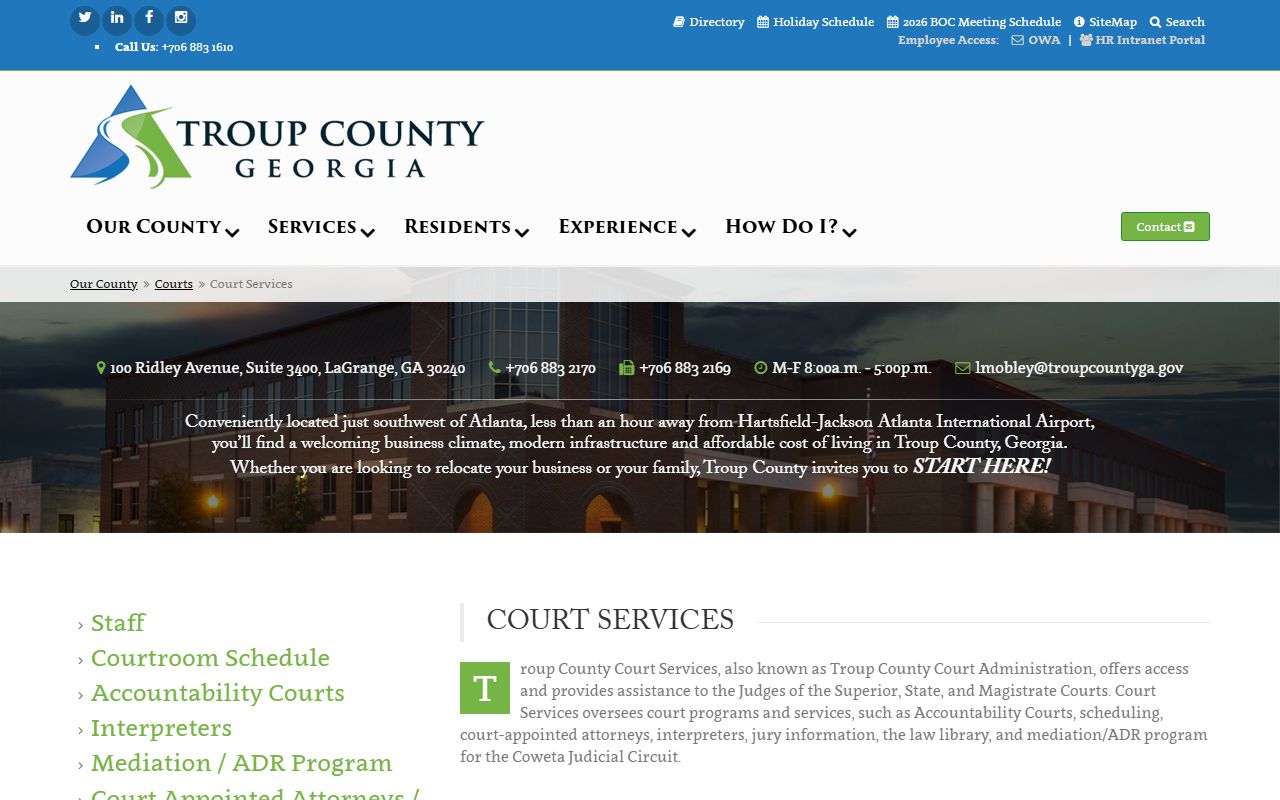
Court Services also supports scheduling, interpreters, law library access, appointed attorneys, mediation, and accountability courts.
Troup County Criminal Records
Felony criminal court records usually move through Superior Court and the Coweta Judicial Circuit District Attorney. Misdemeanor, traffic, and ordinance prosecutions in State Court are handled by the Solicitor. Magistrate Court is often the first court-level stop after an arrest because it issues countywide arrest warrants, handles first appearances within 48 to 72 hours for jailed defendants, sets bail where warranted, and schedules committal hearings.
Charge records are not the same as convictions. A charge can be filed, amended, reduced, dismissed, nolle prossed, dead docketed, or resolved by plea or trial. The full criminal case file belongs with the court, while jail booking details and current custody information come from the sheriff or jail roster. The Troup County criminal court records page separates court case files from booking records.
Troup County Warrant Records
Troup County Magistrate Court has criminal jurisdiction throughout the county, including all municipalities. The Magistrate Court page states criminal arrest warrants are issued for all crimes, felonies and misdemeanors, alleged to have been committed in the county. Georgia.gov says warrant information should be requested from the local sheriff's office, and it notes that some offices provide information by phone while others require in-person appearance.
Practical Troup County warrant checks use more than one channel: the Sheriff's Office for active warrant inquiry and execution status, Magistrate Court for arrest warrants and first appearances, the clerk for bench warrants reflected in Superior or State case files, and municipal courts for missed city-citation court dates.
Troup County Inmate Records
The Sheriff's Office is at 130 Sam Walker Drive in LaGrange, with James Woodruff serving as sheriff. The office provides daily law enforcement throughout Troup County, especially in unincorporated areas, and often within LaGrange, Hogansville, and West Point city limits. The current jail roster uses a vendor-hosted Troup County inmate records search for current inmates.
The vendor result list shows current inmates, an updated timestamp, sort/filter options, name/ID, and date/time arrested columns. Georgia.gov states county jail inmates should be searched through county systems, while sentenced state offenders are searched through the Georgia Department of Corrections. The Troup County inmate records page covers the jail roster, GDC search, and video visitation details.
The Sheriff's Office county page lists the office contact block, sheriff profile, and public-safety programs.
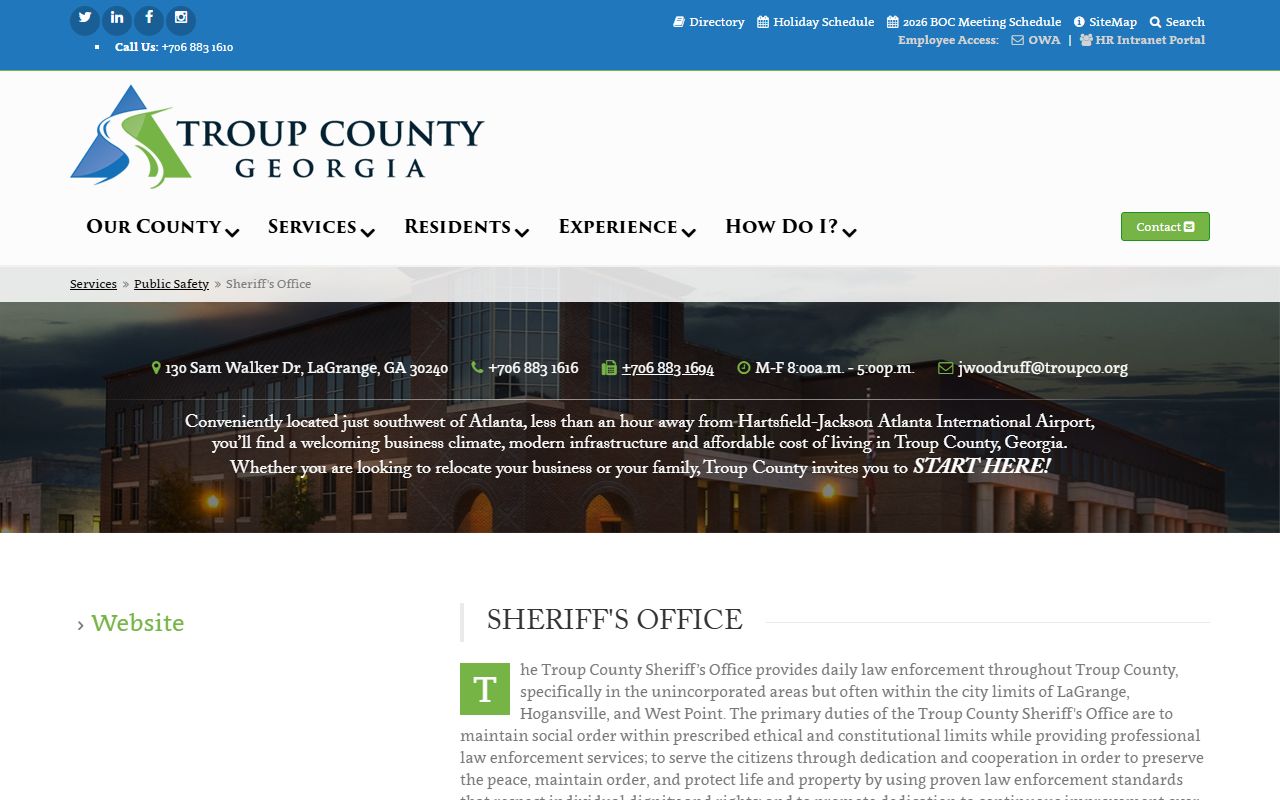
The sheriff channel is also the correct local fallback when a warrant or booking record is not visible online.
Troup County Traffic Records
Troup County State Court handles traffic cases along with misdemeanors. The clerk's traffic citation line is 706-883-1725, and the PayYourTix portal uses last name plus citation number or driver license number. The clerk's traffic page says a citation may take up to three weeks to appear in the payment system and usually shows as paid within a few hours after payment.
LaGrange Municipal Court handles city traffic offenses, DUI, misdemeanor shoplifting, possession of less than one ounce of marijuana, parking, animal control, and ordinance violations. Court is held each Tuesday at 1:30 p.m., and the city states no cell phones are allowed in the courtroom. Hogansville Municipal Court moved to 600 East Main Street, with city court services there beginning April 26, 2024.
The Georgia DDS driving-history page is separate from county traffic court records.
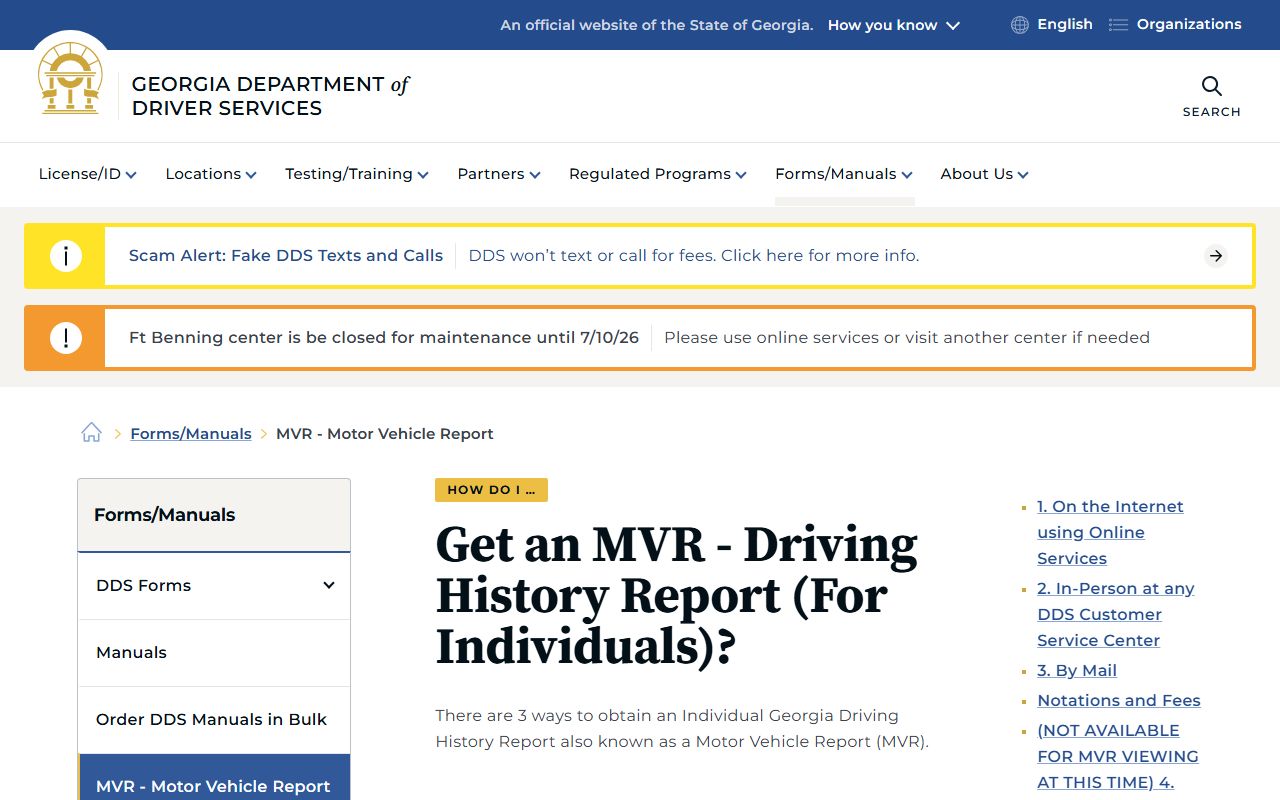
A court traffic record shows the case and disposition; a DDS motor vehicle report shows license history, reported convictions, points, and suspension data.
Troup County Probate Records
Marriage licenses and probate records are handled by Troup County Probate Court, not by the Superior Court clerk. Probate Court is on the second floor of the Government Center and is posted as open Monday through Friday, 8:00 a.m. to 4:30 p.m. Probate jurisdiction includes wills, estates, guardianships, conservatorships, involuntary treatment commitments, marriage licenses, weapons carry licenses, and related administrative duties.
Divorce records are different. Divorce cases are Superior Court records handled by the Clerk of Superior and State Courts. Georgia.gov states DPH can confirm divorces for some periods, but copies of divorce records are held by the Clerk of Superior Court in the county where the divorce was granted. Probate Court also does not handle birth and death records; it directs those to the Troup County Health Department.
- Testator
- A person who made a will.
- Executor
- A person named to carry out a will.
- Conservator
- A person appointed to manage property or finances for another person.
Troup County Record Access Laws
Georgia public-records law strongly favors access, but court records still have limits. O.C.G.A. 50-18-70 states the general policy that public records should be open for inspection without delay, subject to exceptions. O.C.G.A. 50-18-72 lists exemptions where disclosure is not required.
Uniform Superior Court Rule 21 states court records are public unless access is limited by law or court procedure. Georgia criminal-history restriction law, O.C.G.A. 35-3-37, governs review, correction, and restriction of certain criminal-history records. Juvenile records have separate protections, including sealing rules and limits on public inspection.
Key point: A public calendar is not the same as a certified case record, and a restricted criminal history may still leave some court-file traces.
Restricted Troup County Records
Restricted records include juvenile files, sealed criminal records, adoption files, sensitive probate mental-health proceedings, personal identifiers, and records made confidential by statute or court order. Juvenile Court operates separately, and public-facing pages should not imply adult-style name searches for juvenile case files. Adoption certificate fees appear in the clerk fee schedule, but adoption files are not ordinary public civil files.
Georgia uses the term record restriction for limiting criminal-history access. GBI explains that for arrests after July 1, 2013 that did not result in conviction, the prosecutor should be contacted rather than a separate application process. In Troup County, misdemeanors and traffic prosecutions route to the Solicitor, while felony cases route to the Coweta Judicial Circuit District Attorney.
Troup County Specialty Courts
Troup County Court Services identifies accountability court programs that promote crime reduction, decreased drug addiction, and mental health awareness. The listed programs include Felony Adult Drug Court, DUI/Drug Court, Mental Health Court, Parental Accountability Court, and Family Treatment Court. Court Services also oversees scheduling, interpreters, jury information, law library, court-appointed attorneys, mediation, probation offices, and the Troup County Drug Lab.
The Accountability Courts page lists the local programs and their treatment-focused purpose.

Program eligibility is not fully published in the inspected source, so current criteria should be confirmed with Court Services.
Troup County Court History
Troup County was founded in 1826 and named for George Michael Troup. LaGrange is the county seat. Historical Superior Court loose records from 1827 through 1900 are described by the Digital Library of Georgia and Troup County Archives, including civil and criminal court records, judicial records, commercial law, debtor-creditor material, and local economic history sources.
Clerk Jackie Taylor's 2024 preservation announcement noted work to preserve old Military Discharge Record and DD214 documents, tied to her long-term goal of preserving county records and local access since taking office in 2000. The Coweta Judicial Circuit mediation program also has local roots. The official ADR page says LaGrange launched one of Georgia's first mediation pilot programs in 1992.
GSCCCA's Troup County clerk profile identifies the clerk, courts managed, county code, office hours, chief deputy, and legal organ.
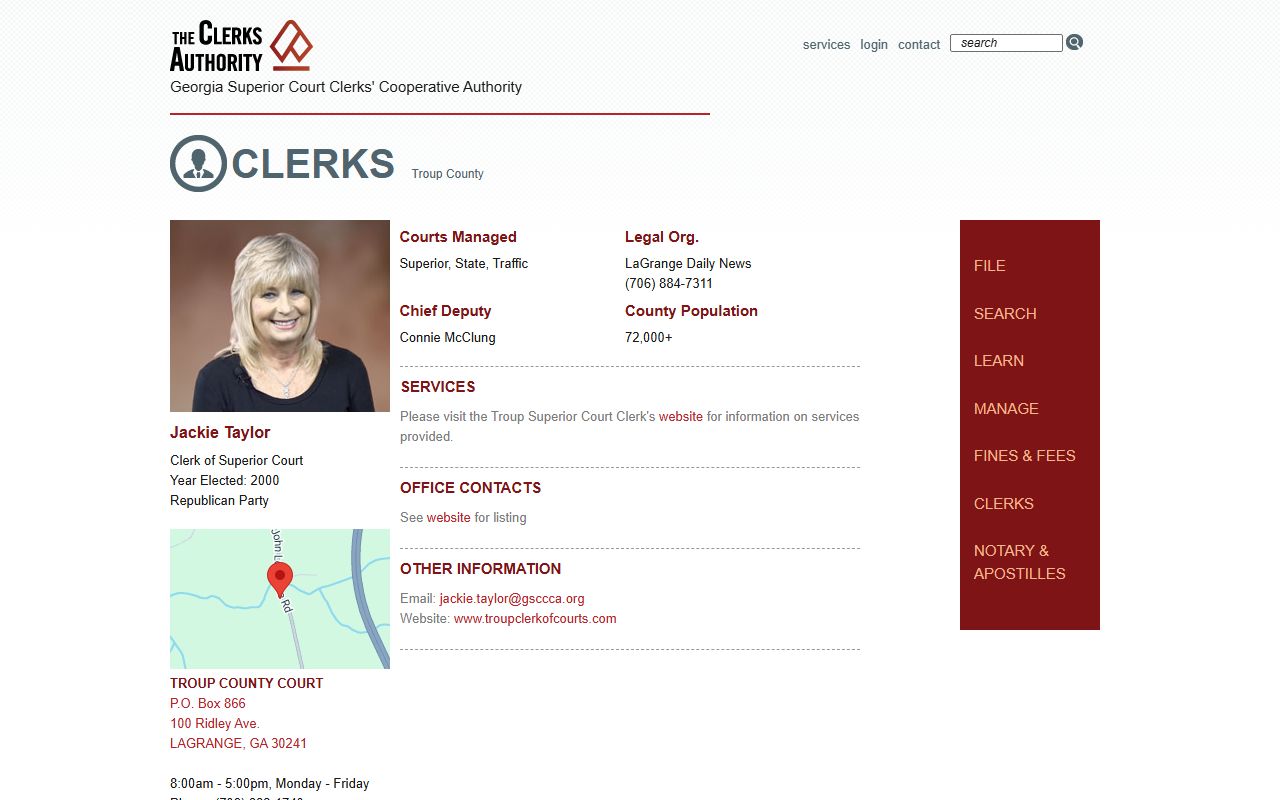
The GSCCCA profile is a useful cross-check when confirming the official clerk title and courts managed.
Troup County Court FAQs
Can Troup County court records be searched online?
Some records and calendars can be checked online, but there is no single free database for all Troup County court records. Use the clerk site, posted calendars, traffic portals, probate marriage search, jail roster, and JustFOIA as separate channels.
Who provides certified court copies?
The office that holds the record provides certified copies. For Superior and State Court files, contact the Clerk of Superior and State Courts. For probate and marriage-license records, contact Probate Court.
Are Troup County warrant records online?
Georgia.gov directs warrant questions to the local sheriff. In Troup County, check with the Sheriff's Office for active warrant inquiry and Magistrate Court for arrest-warrant and first-appearance records.
Are court traffic records the same as a DDS driving history?
No. A court traffic record shows the citation case, court date, plea, disposition, fine, and failure-to-appear activity. A Georgia DDS motor vehicle report is a separate driver-history file.